You catch your reflection in the car mirror after a summer of beach days and porch dinners. And there it is: a flush across the cheeks that does not fade, plus a scatter of freckled patches on your chest that were not there a few years ago. Your friends keep naming lasers — IPL, VBeam®, Laser Genesis — and you have no idea which one would actually help the thing that bothers you.
Medically reviewed by Theresa Kueny, PA-C — Reviewed September 25, 2026
Why Fall and Winter Are the Season Patients Start Asking About Lasers
Fall has a way of making summer visible. The tan starts to fade, the daylight shortens, and what is left behind — the uneven patches, the ruddiness, the softening of skin texture — suddenly reads clearly in indoor light. Patients across the Main Line tend to book consultations right about the time the pool covers go on in Villanova and Wayne, which makes it a good time to finally ask the question you have been putting off since June.
Fall marks the start of a continuous low-sun treatment window that extends all the way through winter and into early spring. That longer timeline lets you complete a full series of sessions before the sun strengthens again in April. Starting now means you finish the work before you need your skin to be socially ready. For a deeper look at the full seasonal advantage, see why winter is the ideal season for peels, lasers, and CO₂ treatments.
What a Cosmetic Laser Actually Does to Skin
A cosmetic laser delivers a precisely controlled beam of light energy at a single wavelength. That energy is absorbed by one specific target in the skin: brown pigment, the red inside a blood vessel, or water in the deeper layers. There it turns into heat, while the surrounding tissue is left largely untouched. That selectivity is the whole point, and it is why one device cannot sensibly do every job. Intense pulsed light (IPL) is a close relative rather than a true laser. It sends out a broad spectrum of light across many wavelengths instead of one. That is why it gets grouped into the same conversation, even though the technology differs.
Nearly every question that lands in a cosmetic consultation falls into one of three buckets:
- Redness: flushing, a persistent pink cast, or fine visible vessels around the nose and cheeks.
- Brown spots and sun damage: freckling, age spots, and mottled tone on the face, chest, and backs of the hands.
- Texture: roughness, enlarged-looking pores, and the crepey quality that shows up under overhead lighting.
Why Sun Exposure Affects Your Treatment Timeline
Light-based treatments work by finding contrast between a target and the skin around it. Recent sun exposure genuinely changes that math, and treated skin stays more sensitive for a while afterward. That combination makes autumn a practical scheduling window. It does not, however, mean you can drop your daily habits: the CDC recommends sun protection year-round, not only in beach season. Consistent protection also addresses the underlying cause, since years of sun exposure cause much of this damage.
IPL vs. VBeam vs. Laser Genesis: What Each One Targets
Here is the short version, organized by what each device is built to find in the skin.
IPL: Sun Spots, Uneven Tone, and Summer's Leftovers
Best for: scattered brown spots, freckling, and blotchy tone on the face, chest, and hands.
Because IPL releases a broad band of light, it is absorbed strongly by brown pigment and, to a lesser degree, by vessels near the surface. That is why it is often discussed for generally uneven skin tone rather than one isolated mark. A detail that surprises first-timers: treated spots usually get darker before they get lighter, taking on a coffee-ground appearance for several days before flaking away on their own over the following week. For a complete discussion of pigment and vascular concerns, see treating red and brown spots with laser technology.
VBeam: Persistent Redness and Visible Blood Vessels
Best for: fixed facial redness and small broken capillaries.
VBeam is a pulsed dye laser, meaning its wavelength is tuned to be absorbed by hemoglobin, the red pigment carried inside blood vessels. That targeting is why it is the device most associated with persistent facial redness and visible blood vessels, the hallmark signs of rosacea. Laser and light-based therapy is among the approaches assessed for those features in a 2015 Cochrane review of rosacea treatments. If redness is your main concern, it is worth understanding the condition itself first — our rosacea care page covers how it is diagnosed and managed.
Laser Genesis: Texture, Pore Appearance, and Collagen Support
Best for: overall texture, pore appearance, and diffuse ruddiness without a single defined target.
Laser Genesis is described as non-ablative, meaning it gently heats the deeper layer of skin without removing the surface. The goal is gradual collagen support across a planned series, not a dramatic change after one visit. That makes it a common choice when nothing specific stands out but the skin simply looks tired.
The three also feel different in the chair. That matters when you are planning around a calendar:
- IPL: a brief snapping feeling, like a rubber band flicked against warm skin. Darkening and flaking follow for a few days.
- VBeam: a quick cool-then-snap pulse. Settings can be adjusted, and higher ones carry more visible after-effects.
- Laser Genesis: steady, spreading warmth rather than snapping. It is typically the most socially convenient of the three.
None of these is a better or worse version of another. They are different tools for different jobs, and many patients turn out to be candidates for more than one over time — often in sequence rather than all at once. Laser hair removal is a separate treatment with a different target and its own set of considerations, covered in detail in that article.
If texture, fine lines, or acne scars are the main concern and you want to go further than Laser Genesis, ask about MultiFrax. It is a fractional resurfacing treatment that works on tiny zones of skin at a time, leaving the skin around them intact so it heals faster.
What to Expect: Before, During, and After
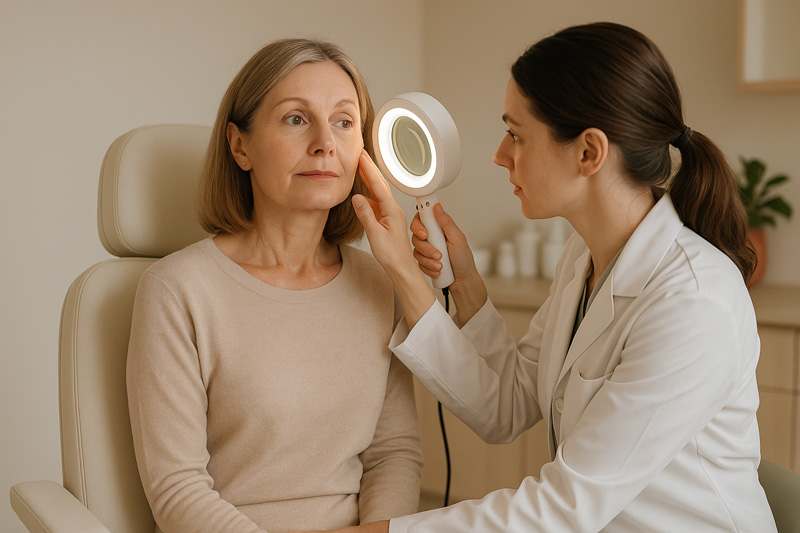
Every plan starts with a skin assessment rather than a device. A dermatologist or physician assistant looks at what is actually causing the concern, reviews your history and any medications, and confirms that the thing you want treated is cosmetic in the first place. Only then does the conversation turn to which technology fits. At Bryn Mawr Dermatology, IPL and Laser Genesis are performed by licensed aestheticians who are Certified Laser Technicians, and VBeam by a licensed medical professional or a Certified Laser Technician.
How to Prepare for a Laser Appointment
- Arrive with clean skin — no makeup, sunscreen, or heavy moisturizer on the treatment area.
- Pause retinoids or other active topicals if your provider instructs you to.
- Disclose all medications and supplements, since some increase sensitivity to light.
- Mention any history of cold sores, which can be relevant before treating around the mouth.
During the appointment, protective eye shielding is standard for both you and the staff. Most facial sessions are measured in minutes rather than hours, and patients typically describe a sensation — heat, a snap, a prickle — more than genuine pain. Afterward, expect some warmth and pinkness, roughly like a mild windburn that settles over hours to a day or two. VBeam at higher settings can cause temporary bruising, called purpura, which is precisely why patients ask about the wedding or work trip on their calendar before booking.
Cosmetic light and laser systems are regulated by the FDA as medical devices, and settings are chosen individually — which is one reason treatment supervised by a board-certified dermatologist matters.
Recovery and Aftercare Basics
- Wash with a gentle, non-foaming cleanser and lukewarm water.
- Apply a bland, fragrance-free moisturizer as often as the skin feels tight.
- Let flaking pigment shed on its own — no scrubbing, no picking.
- Use broad-spectrum sunscreen reapplied throughout the day, per AAD guidance.
The one thing to remember: results from any of these devices build across a series of sessions spaced weeks apart. Careful sun protection between visits is what protects the progress you have already made.
Results, the number of sessions, and whether a given device suits you at all vary from person to person. No reputable practice can promise a specific outcome in advance.
How to Choose the Right Laser for Your Skin and Goals
The decision usually comes down to three questions: What bothers you most when you look in the mirror? What is your skin tone and treatment history? And how much visible recovery can your calendar absorb over the next month?
Match Your Concern to the Device
Brown spots and mottled tone: IPL is the usual starting point. Fixed redness and visible vessels: VBeam is purpose-built for that target. Overall texture and crepiness: Laser Genesis works gradually across a series, which aligns with the way collagen and skin structure change with age.
Because these devices rely on contrast between the target and the surrounding skin, your dermatologist evaluates skin tone carefully before selecting settings. This is individualized medicine, not a menu item — the same device at the same setting is not appropriate for every complexion.
When a Medical Skin Exam Should Come First
One caveat carries real weight: a new or changing spot should be evaluated before anyone treats it cosmetically. A lesion that needs medical attention should never be mistaken for a sun spot and lasered away. If you are not certain what a mark is, the skin exam comes first, and the cosmetic conversation second.
It is also worth knowing what lasers do not do. They address tone, redness, and texture. Lines created by repeated muscle movement, skin laxity, and stubborn pockets of fat are different problems handled by different tools — such as Botox, Dysport, and Jeuveau, Ultherapy, Sofwave, or Morpheus8.
For patients in Villanova, Wayne/Chesterbrook, and Collegeville, the practical advantage is that one practice handles both the mole check and the cosmetic consultation. The board-certified dermatologists who manage medical skin conditions are the same clinicians evaluating your redness or pigment. In the end, the honest answer to which laser is right for me comes from an in-person assessment, not an article.
Frequently Asked Questions
Is IPL actually a laser, and does that difference matter for my results?
Technically, no. IPL emits a broad spectrum of light rather than the single wavelength a true laser produces. The difference matters mainly in targeting: broad-spectrum light reaches several targets at moderate intensity, while a tuned laser concentrates on one. That is why IPL is often favored for general mottling and VBeam for a specific vascular target.
Can I have a laser treatment if I still have a tan from the summer?
Usually your provider will ask you to wait. A tan adds pigment to the surrounding skin, which reduces the contrast these devices depend on and can raise the risk of an uneven response. While you wait, keep an eye on any changes in the skin worth having examined and bring them up at your visit.
How many sessions will I need before I see a difference?
Light-based treatments are planned as a series spaced weeks apart rather than a one-time event, and the number depends on the concern, the device, and how your skin responds. Some people notice change after the first session; others need several before the result reads clearly. Your dermatologist will give you a realistic range after examining your skin.
Can redness treatments and pigment treatments be combined, or should I do one at a time?
Both approaches exist, and the right sequence depends on your skin, your tolerance for recovery, and which concern is most prominent. Many patients address one target first, see how the skin responds, then decide whether to layer in a second approach. That plan is best built in a consultation rather than assumed in advance.
Ready to Find Out Which One Fits
Still not sure whether redness, brown spots, or texture is the concern to tackle first? The board-certified dermatologists at Bryn Mawr Dermatology, including a fellowship-trained Mohs surgeon, see patients across three Main Line locations and can evaluate your skin before you commit to any cosmetic treatment. Request a consultation or call (610) 525-7800.
This article is for general educational purposes and is not a substitute for individualized medical advice, diagnosis, or treatment. Always consult a qualified healthcare professional about your specific skin concerns.