Medically reviewed by Christine Stanko, MD, FAAD and Theresa Kueny, PA-C · Reviewed August 20, 2026
You've been eyeing that late-October cosmetic appointment for months, telling yourself fall is the 'safe' time for skin tightening—the season when you can finally address the jawline laxity or brow droop without risking hyperpigmentation or canceling beach plans. But what if you didn't have to wait? What if you could firm and lift your skin in June or July, return immediately to your summer routine, and still see visible results by the holidays?
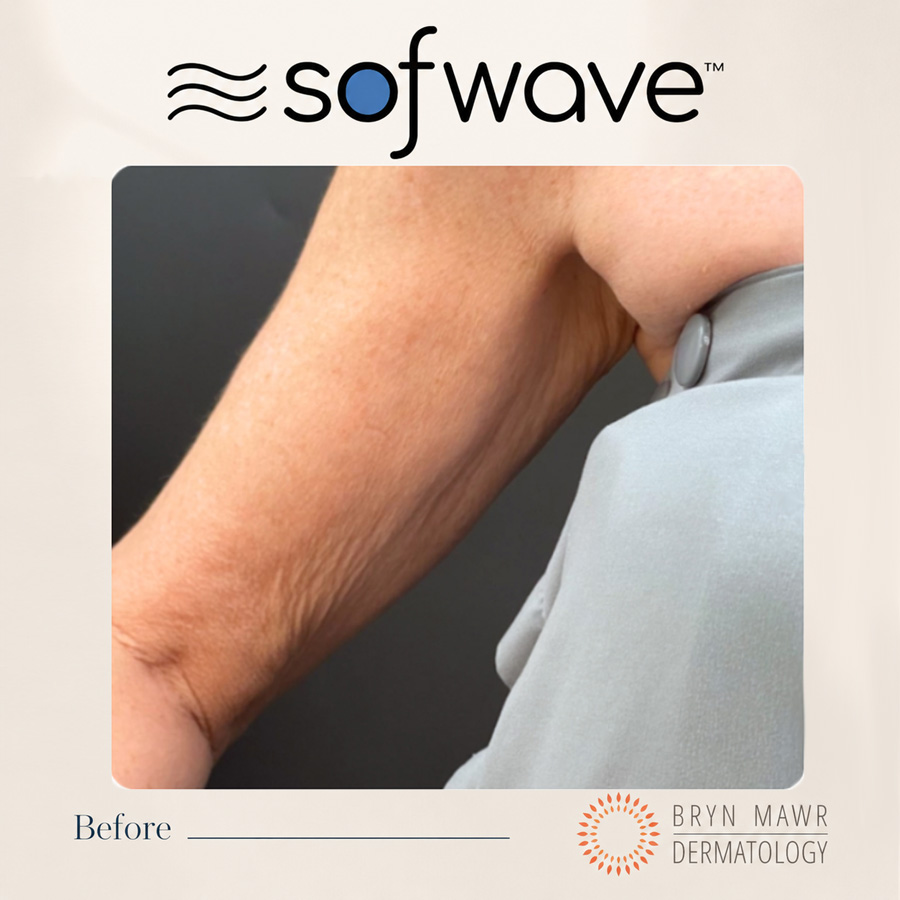
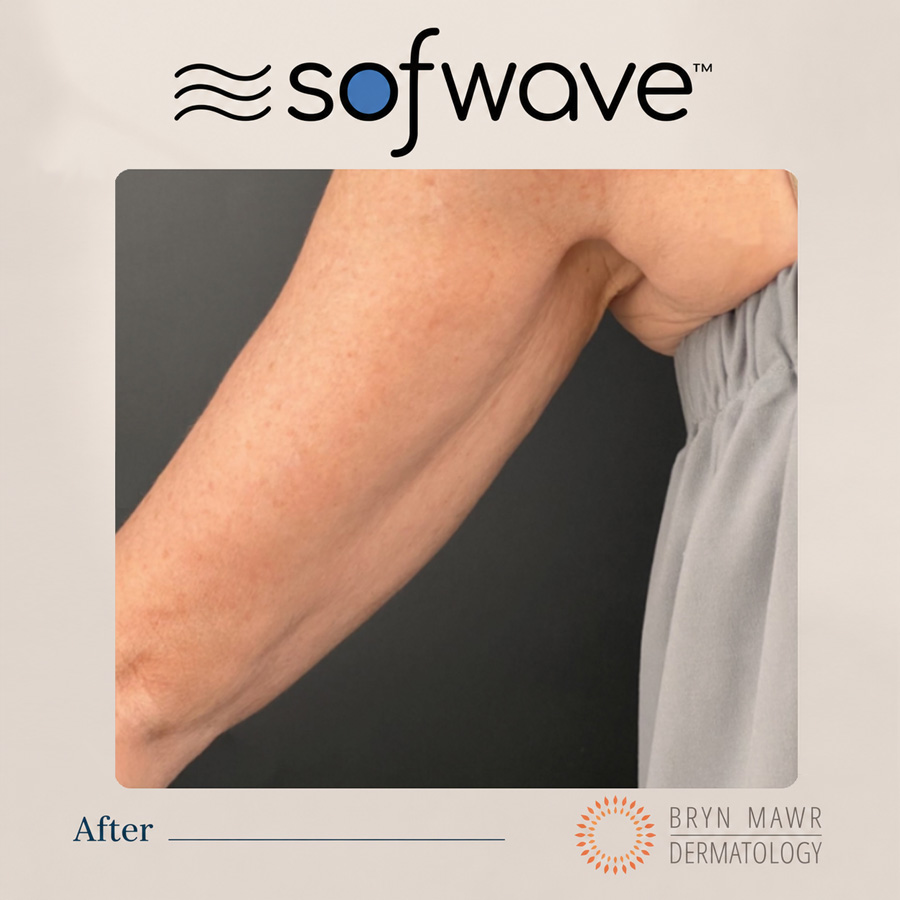
That's the unique advantage of Sofwave, an ultrasound-based skin tightening technology that bypasses the sun-sensitivity constraints most rejuvenation treatments carry. For patients across the Main Line juggling active summer schedules, Sofwave offers something rare in cosmetic dermatology: a no-downtime, no-photosensitivity treatment you can schedule around vacations, weddings, and outdoor sports without conflict.
Why Most Skin Tightening Treatments Require Sun Avoidance
The standard advice in cosmetic dermatology is clear: schedule your laser resurfacing, IPL, or chemical peel in late fall or winter, avoid sun exposure for weeks before and after, and plan your social calendar around the recovery window. That's not caution for caution's sake—it's rooted in how these treatments interact with your skin.
How Light and Heat-Based Treatments Interact With Melanin
Most rejuvenation modalities work by delivering energy directly into or through the skin's outermost layer, the epidermis. Intense pulsed light (IPL) targets pigment, heating melanin to break up brown spots and redness. Fractional lasers—both ablative and non-ablative—create controlled micro-injuries in the epidermis and dermis to trigger collagen remodeling. Chemical peels dissolve the bonds between dead skin cells, causing the top layers to slough off and reveal fresher skin beneath.
Each of these approaches temporarily disrupts the skin's protective barrier or increases its reactivity to ultraviolet light. When the epidermis is healing or when melanin has been actively targeted, sun exposure can trigger a rebound pigmentation response called post-inflammatory hyperpigmentation (PIH)—dark patches that form after inflammation or injury, especially common in medium-to-darker skin tones.
The Post-Treatment Photosensitivity Window
The timeline varies by modality, but the pattern is consistent:
- Pre-treatment sun avoidance: 2–4 weeks before IPL or laser to reduce baseline melanin activity and lower the risk of uneven energy absorption
- Post-treatment photosensitivity: 4–8 weeks after ablative procedures, 2–4 weeks after non-ablative or IPL, during which unprotected sun exposure dramatically increases PIH risk
- Practical burden: Patients delay treatments until fall or winter, miss summer social events, or schedule around vacations with military precision
For active patients in Villanova, Wayne, and Collegeville who refuse to put summer on hold, this creates a real dilemma: either accept skin laxity for another six months or risk pigmentation complications by treating during high-sun months.
What Makes Sofwave Different: Ultrasound Energy That Bypasses the Surface
Sofwave takes a fundamentally different approach. Instead of heating or disrupting the epidermis, it delivers focused ultrasound energy to a precise depth beneath the skin's surface, leaving the top layer untouched.
How SUPERB Ultrasound Targets the Mid-Dermis
Sofwave's proprietary SUPERB technology (Synchronous Ultrasound Parallel Beam) generates ultrasound waves that pass harmlessly through the epidermis and converge at a depth of approximately 1.5 millimeters—the mid-dermis, where collagen and elastin fibers provide structural support. At that focal point, the energy creates controlled micro-injury, triggering the body's natural wound-healing cascade: inflammation, new collagen synthesis, and tissue remodeling.
Because the ultrasound energy never targets melanin and never disrupts the epidermal barrier, there is no wound-healing phase that creates photosensitivity. The skin's surface remains intact throughout the treatment and recovery process. Daily sunscreen remains important for general skin health and long-term photoaging prevention, but Sofwave itself does not impose a sun-avoidance mandate the way lasers and peels do.
Why All Skin Tones Can Safely Receive Sofwave Year-Round
Traditional light-based treatments carry elevated PIH risk for patients with darker skin tones (Fitzpatrick types IV–VI) because melanin absorbs energy. Providers often avoid or significantly adjust settings for these patients, particularly during summer months when baseline pigmentation is higher.
Sofwave's mechanism eliminates that concern. Because it doesn't interact with pigment at all, it is suitable across all Fitzpatrick skin types, I–VI, at any time of year. The technology is FDA-cleared for lifting the eyebrow, the submental area (chin and jawline), and neck, as well as reducing fine lines and wrinkles.
That said, certain patients are not candidates for Sofwave: those with implanted electronic devices (such as pacemakers) or open wounds or severe inflammation at the treatment site should not receive this procedure. Your provider will assess your medical history and skin condition to determine candidacy.
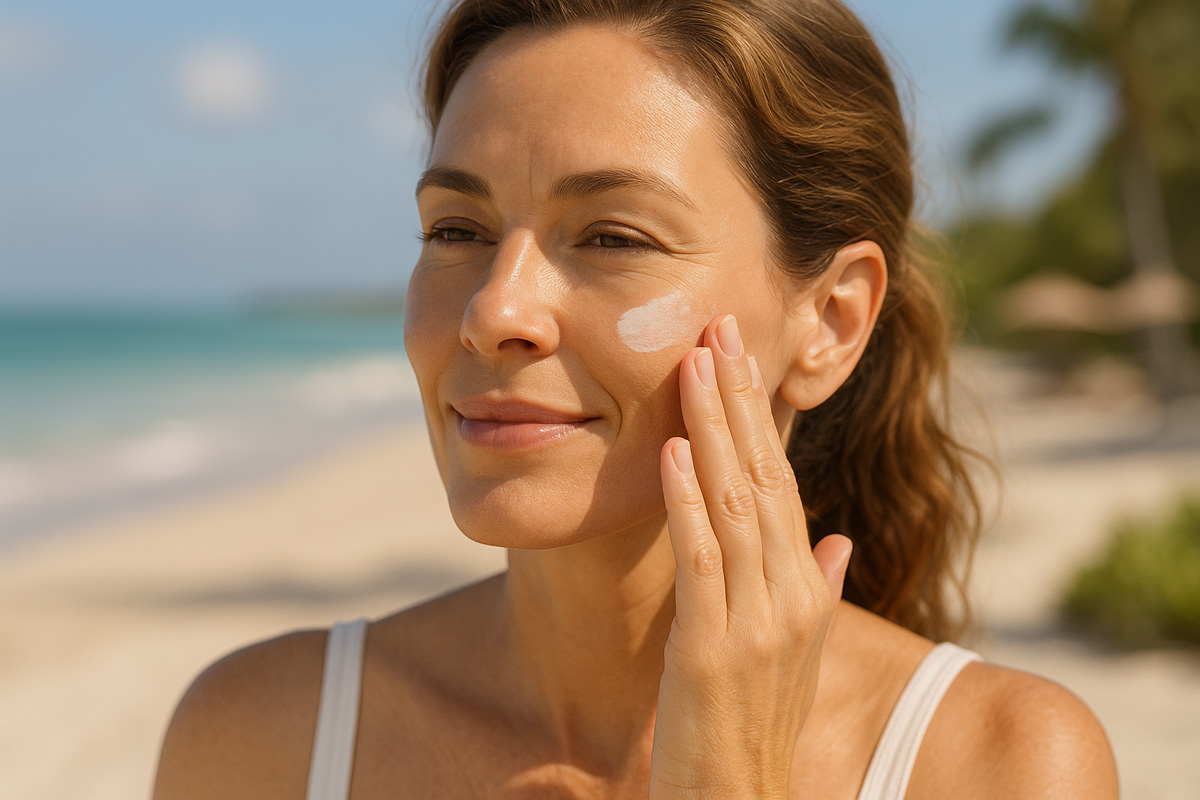
Providers still counsel all patients on daily broad-spectrum SPF 30 or higher. Sun protection preserves cosmetic results, prevents photoaging, and reduces skin cancer risk—but it's a baseline skin-health practice, not a treatment-specific restriction.
The Practical Advantages of a Summer Skin Tightening Treatment
The absence of photosensitivity translates into real-world scheduling flexibility that other modalities simply cannot offer.
Real-World Scheduling: How Sofwave Fits Around Summer Plans
Consider the typical logistics of a summer cosmetic procedure:
- No pre-treatment sun avoidance: You don't need to stay indoors for weeks leading up to your appointment. If you've been at the beach the weekend before, that doesn't disqualify you.
- No downtime requirement: Most patients experience little to no redness, bruising, or swelling. Any mild redness or tenderness typically resolves within a few hours, and patients return immediately to outdoor activities, exercise, and travel plans. Makeup application is allowed the same day if desired.
- No post-treatment hibernation: You can attend a summer wedding, go on a planned vacation, or resume your regular tennis or golf schedule without risking treatment outcomes.
- Session length: A single Sofwave session typically takes 15–45 minutes depending on treatment area (face, neck, or brow), meaning it fits into a lunch break or between errands.
For patients in the Philadelphia area balancing demanding work schedules, family obligations, and active social lives, that convenience is not trivial. You're not sacrificing six weeks of summer for firmer skin—you're integrating the treatment into your existing routine.
Timing advantage: Collagen remodeling is not instant. New collagen synthesis and fiber reorganization take 4–12 weeks to produce visible improvement. Starting treatment in June or July means your skin looks noticeably firmer, smoother, and more lifted by fall events and the holiday season—when you'll want to look your best.