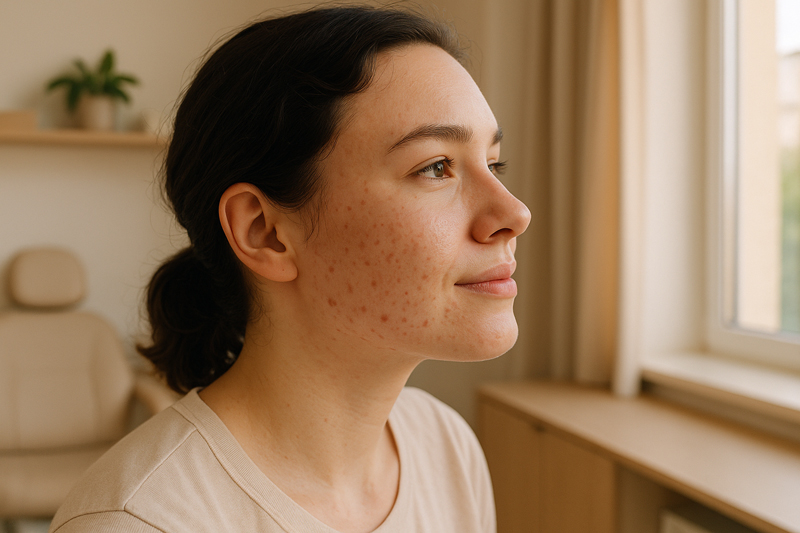
Have you spent months rotating through every acne wash, spot treatment, and serum at the drugstore—only to wake up to new breakouts anyway? If over-the-counter products aren't delivering the clear skin you've been chasing, you're not alone, and you're not out of options. Prescription acne treatments exist precisely for the stubborn cases that topicals can't resolve on their own.
For patients across the Main Line—from Villanova to Wayne to Collegeville—who've hit the wall with store-bought solutions, understanding when and how prescription intervention works can be the turning point toward finally clearing persistent acne.
Signs It's Time to Move Beyond Over-the-Counter Products
Not every case of acne requires a prescription, but certain patterns signal that topical products alone won't be enough. Recognizing these signs early can prevent scarring and emotional distress that intensifies when breakouts persist month after month.
What Dermatologists Look For
Board-certified dermatologists assess acne severity on a spectrum. Cystic acne—deep, painful nodules beneath the skin's surface—rarely responds to benzoyl peroxide or salicylic acid alone. These inflamed lesions damage the dermis (the skin's deeper layer), leaving behind permanent scars and dark spots that outlast the breakouts themselves.
Even moderate acne warrants prescription consideration when it:
- Covers large areas of the face, chest, or back
- Persists despite consistent use of quality over-the-counter products for 8 to 12 weeks
- Causes new post-inflammatory hyperpigmentation (dark marks) with each breakout cycle
- Triggers significant anxiety, depression, or social withdrawal
According to the American Academy of Dermatology, the emotional impact of acne is a valid clinical indicator for escalating care. Patients who avoid social situations, cancel plans, or feel constant distress about their skin deserve intervention—not just sympathy.
Why Waiting Can Make Treatment Harder
Every acne cyst that forms has the potential to leave a scar. Once collagen in the dermis is disrupted, that structural damage is permanent. Early prescription treatment stops new lesions from forming, which directly prevents new scars. The AAD notes that treating acne aggressively early often leads to shorter overall treatment courses and better long-term outcomes than waiting until scarring is widespread.
Delaying care also reinforces the false belief that acne is cosmetic or trivial. It is not. Acne is a medical condition with proven treatments, and waiting rarely leads to spontaneous improvement in adults or in cases of severe teenage acne.
Prescription Treatment Routes Your Dermatologist May Recommend
Dermatologists match acne treatment options to your acne type, severity, medical history, and lifestyle. The goal is not just to clear current breakouts but to prevent new ones and minimize long-term skin damage.
Oral Antibiotics: A Common Option for Inflammatory Acne
Doxycycline and minocycline are the most commonly prescribed oral antibiotics for acne. They work in two ways: reducing Cutibacterium acnes bacteria on the skin and calming inflammation inside active pimples. Most patients take them once or twice daily for 3 to 6 months.
Per AAD guidance, oral antibiotics should always be combined with a topical retinoid or benzoyl peroxide to maximize effectiveness and reduce the risk of antibiotic resistance. Dermatologists limit antibiotic courses to the shortest duration necessary, then transition patients to maintenance therapy with topicals alone.
Important considerations:
- Sun sensitivity increases—daily SPF 30 or higher is mandatory
- Nausea or stomach upset can occur; taking the medication with food often helps
- Not suitable during pregnancy
- Results typically appear within 6 to 8 weeks
Hormonal Options for Women
If your acne flares predictably before your period or clusters along the jawline and chin, hormones may be driving your breakouts. Spironolactone, an oral medication that blocks androgen (male hormone) activity, has become a cornerstone of treatment for adult women with hormonal acne patterns.
Clinical studies show that spironolactone significantly reduces oil production and inflammatory lesions in women, often within 3 months. It is taken daily, typically at doses of 50 to 100 mg. Because it can affect potassium levels and blood pressure, your dermatologist will order baseline lab work and monitor you periodically.
Combined oral contraceptives (birth control pills) are another hormonal route. The FDA has approved specific formulations for acne treatment. These pills regulate hormone fluctuations that trigger breakouts, making them especially effective for women whose acne worsens cyclically.
Both spironolactone and oral contraceptives require consistent use—they do not work as spot treatments. Stopping either medication often leads to acne returning within a few months.
Isotretinoin: The Most Effective Option for Severe Acne
Isotretinoin (commonly known by the brand name Accutane, though many generics exist) is the most effective option for long-term remission, and many patients see lasting clearing. It works by shrinking oil glands, dramatically reducing oil production, and preventing the clogged pores that lead to breakouts.
Dermatologists prescribe isotretinoin for:
- Severe cystic or nodular acne
- Moderate acne that has not responded to multiple other treatments
- Acne causing significant scarring or emotional distress
A typical course lasts 4 to 6 months. The FDA's iPLEDGE program governs isotretinoin use because the medication causes severe birth defects. The program requires all patients—regardless of gender—to enroll. Patients who can become pregnant must use reliable contraception and complete pregnancy prevention counseling and testing. Exact iPLEDGE requirements are being updated, so patients should confirm current rules with their dermatologist at enrollment.
Isotretinoin's side-effect profile includes dryness (lips, eyes, skin), temporary worsening of acne in the first few weeks, and rare elevation of cholesterol or liver enzymes. Most side effects are manageable with supportive care: intense moisturizers, lip balm, and artificial tears. Your dermatologist monitors bloodwork monthly to catch any lab changes early.
Despite the monitoring requirements, isotretinoin remains the gold standard for severe acne. Many patients experience complete clearing that lasts years or indefinitely after a single course.
What to Expect at Your Dermatology Visit
Walking into a dermatology appointment for acne treatment is not about judgment—it is about partnership. Your dermatologist's goal is to understand your skin, your history, and your life so they can build a plan that actually fits.
Questions Your Dermatologist Will Ask
Expect a detailed conversation covering:
- Every acne product or treatment you have tried, how long you used it, and whether it helped
- Your menstrual cycle and any pattern of breakouts tied to your period (if applicable)
- Current medications, supplements, or birth control
- Whether you are pregnant, planning pregnancy, or breastfeeding
- Family history of severe acne or scarring
- How acne affects your daily life—work, school, social activities, self-esteem
Your dermatologist will examine your skin closely, noting the types of lesions present (blackheads, whiteheads, papules, cysts), their distribution, and any existing scars or hyperpigmentation. This clinical assessment, combined with your history, determines which prescription route makes the most sense.
Timeline and Monitoring
Prescription acne treatments are not instant. Most typically require 8 to 12 weeks to show their full effect. Your dermatologist will set realistic expectations from the start and schedule follow-up visits to track progress, adjust doses, and address side effects.
If isotretinoin or hormonal therapy is on the table, baseline lab work (blood tests checking liver function, cholesterol, and sometimes hormone levels) will be ordered before you start. Follow-up labs occur monthly during isotretinoin treatment and periodically with spironolactone.
For patients in the Philadelphia area, Bryn Mawr Dermatology offers flexible scheduling across three Main Line locations, making it easier to stay on track with monitoring appointments without disrupting your routine.
Managing Side Effects and Maximizing Results
Every effective acne medication comes with trade-offs. The key is knowing what to expect and how to support your skin through the adjustment period.
Isotretinoin: Dryness everywhere—lips, eyes, nasal passages, skin. Combat this with fragrance-free moisturizer applied multiple times daily, a rich lip balm (patients often go through a tube per week), and preservative-free artificial tears. Avoid waxing, harsh exfoliants, and aggressive facials during treatment.
Oral antibiotics: Sun sensitivity and potential stomach upset. Take your dose with food, wear SPF 30 or higher daily, and avoid tanning beds entirely. If nausea persists, call your dermatologist—switching to a different antibiotic often solves the issue.
Retinoids (topical or oral): Initial purging—your skin may look worse in weeks 2 to 4 as clogged pores turn over faster. This is temporary and a sign the medication is working. Gentle, fragrance-free cleansers and moisturizers are essential. Avoid layering acne products; let the prescription do its job.
Hormonal therapy: Irregular periods or spotting in the first few months with oral contraceptives; mild breast tenderness or fatigue with spironolactone. Most side effects diminish after the first 2 to 3 months.
When to call your dermatologist immediately: Severe dryness that cracks and bleeds, mood changes (depression, anxiety, suicidal thoughts), persistent severe stomach pain, signs of allergic reaction (rash, swelling, difficulty breathing), or vision changes.
Patience is not optional. Acne treatments work on a biological timeline—skin cells turn over over a period of weeks, and it takes multiple cycles to see full clearing. Stick with the plan, protect your skin, and communicate openly with your dermatologist if something feels wrong.
Patient Questions
How long does it take for prescription acne treatments to work?
Most prescription acne treatments typically require 8 to 12 weeks to show significant improvement. Oral antibiotics often produce visible results within 6 to 8 weeks. Hormonal therapy (spironolactone or oral contraceptives) typically takes 3 months. Isotretinoin clearing becomes obvious around month 2 or 3, with full results at the end of the 4-to-6-month course. Patience during the first few weeks is critical—many treatments cause temporary worsening (purging) before skin improves.
Can I use my regular skincare products while on prescription acne medication?
It depends on the products. Prescription treatments—especially retinoids and isotretinoin—make skin more sensitive. Switch to gentle, fragrance-free cleansers and moisturizers. Avoid physical scrubs, harsh toners, additional acne actives (salicylic acid, benzoyl peroxide unless prescribed together), and anything with alcohol or fragrance. Your dermatologist will give you a tailored skincare routine that supports, rather than fights, your prescription. Daily SPF 30 or higher is mandatory with any prescription acne treatment.
Is isotretinoin (Accutane) safe, and who is a good candidate?
Isotretinoin is safe when used under proper dermatologic supervision with monthly monitoring through the FDA iPLEDGE program. Good candidates include patients with severe cystic acne, moderate acne that has failed multiple other treatments, or acne causing scarring and significant emotional distress. It is not appropriate during pregnancy due to severe birth defect risk. Patients who can become pregnant must use reliable contraception and complete required pregnancy prevention counseling and testing as outlined by the program. Side effects—primarily dryness—are manageable with supportive care.
Will my acne come back after I stop prescription treatment?
It depends on the treatment and your individual skin. Isotretinoin often produces long-term remission—many patients remain clear for years or permanently after one course. Oral antibiotics and hormonal therapy generally require ongoing maintenance; stopping them frequently leads to acne returning within a few months. Most dermatologists transition patients from oral medications to long-term topical maintenance (retinoids, benzoyl peroxide) to keep skin clear after initial treatment ends. Regular follow-ups help catch early breakouts before they escalate.
Tired of battling stubborn acne with products that don't deliver? The board-certified dermatologists at Bryn Mawr Dermatology build personalized prescription treatment plans for patients across the Main Line, including Villanova, Wayne, Chesterbrook, and Collegeville. Schedule your acne consultation today and take the first step toward clearer, healthier skin.
This article is for educational purposes only and does not constitute individual medical advice. Patients should consult a board-certified dermatologist for personalized treatment recommendations.